Energy Density of Common UK Treats and Meals
Nutritional comparison of discretionary foods and their caloric contribution
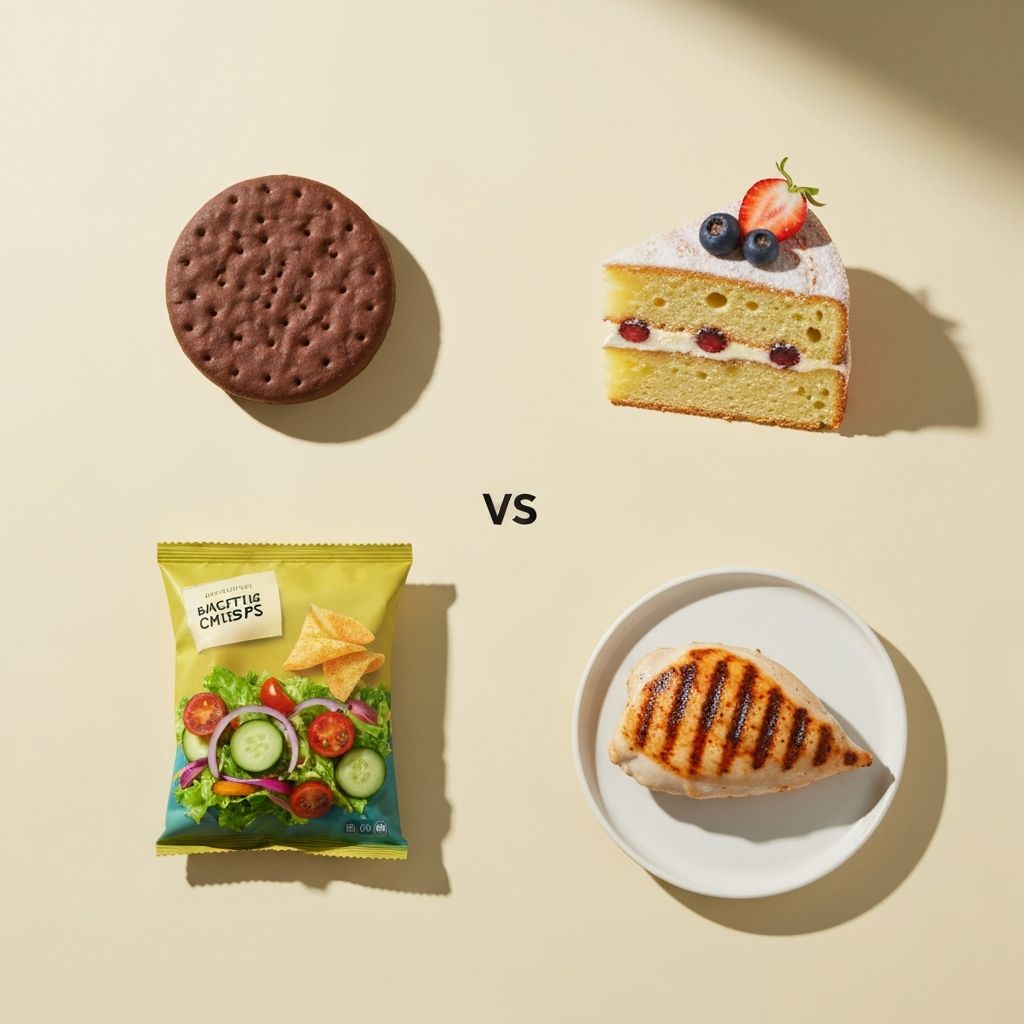
Understanding Energy Density
Energy density refers to the amount of energy (calories) contained in a given weight or volume of food. Foods can be compared on this dimension to understand their relative contribution to total daily energy intake.
Discretionary foods—confectionery, pastries, fried snacks, and similar items—typically exhibit high energy density. This means that relatively small portions contain substantial amounts of energy. In contrast, foods high in water content and fibre, such as vegetables and whole grains, have lower energy density and therefore deliver fewer calories per gram.
This distinction becomes important when examining how different foods contribute to total daily intake. A small chocolate bar may contain more energy than an entire plate of vegetables and lean protein.
Typical Energy Content of British Discretionary Foods
The following represents approximate energy content of commonly consumed British treats and discretionary items:
| Food Item | Typical Portion | Energy (kcal) |
|---|---|---|
| Chocolate digestive biscuit | 1 biscuit (14g) | 70 |
| Slice of Victoria sponge cake | 1 slice (50g) | 210 |
| Packet of crisps | 1 packet (30g) | 160 |
| Chocolate bar (milk chocolate) | Standard bar (40g) | 220 |
| Slice of bread with butter | 1 slice + butter (20g) | 180 |
| Sugary soft drink | 330ml can | 140 |
Comparison with Main Meal Components
To contextualise discretionary food energy content, comparison with typical main meal components is instructive:
- Grilled chicken breast (150g): approximately 240 kcal
- Cooked rice (150g): approximately 195 kcal
- Mixed vegetables (200g): approximately 60–100 kcal
- Olive oil (1 tablespoon): approximately 120 kcal
- Baked potato (200g): approximately 160 kcal
This comparison illustrates that a single chocolate bar (220 kcal) contains similar energy to a serving of grilled chicken or a larger volume of cooked vegetables and rice combined. This demonstrates why understanding portion sizes and frequency of discretionary food consumption matters for total daily energy intake.
Frequency and Cumulative Effect
While individual portions of treats may appear modest, their cumulative effect over a day or week becomes significant. Research on dietary patterns documents that frequent consumption of small portions of discretionary foods results in substantial daily energy totals.
For example, a person consuming two biscuits, a confectionery item, and a sugary beverage daily accumulates approximately 400–500 extra calories per day, translating to 2,800–3,500 calories per week from discretionary sources alone. This constitutes a meaningful proportion of many people's daily energy intake targets.
The cumulative nature of discretionary food consumption is often underestimated in subjective assessment. People frequently report consuming treats "occasionally" while objective dietary records reveal consistent daily consumption patterns.
Energy Density and Satiety
Energy-dense foods often possess lower satiety potential per calorie consumed. This means that individuals may consume greater quantities before experiencing satiation signals. The combination of high energy density and low satiety creates a scenario where significant energy intake occurs with limited corresponding fullness signals.
This physiology partly explains why discretionary foods are often implicated in overconsumption patterns. A person consuming an energy-dense, highly palatable food may ingest substantial calories while their body's satiety mechanisms—which evolved in environments with lower food energy density—provide insufficient feedback to stop consumption.